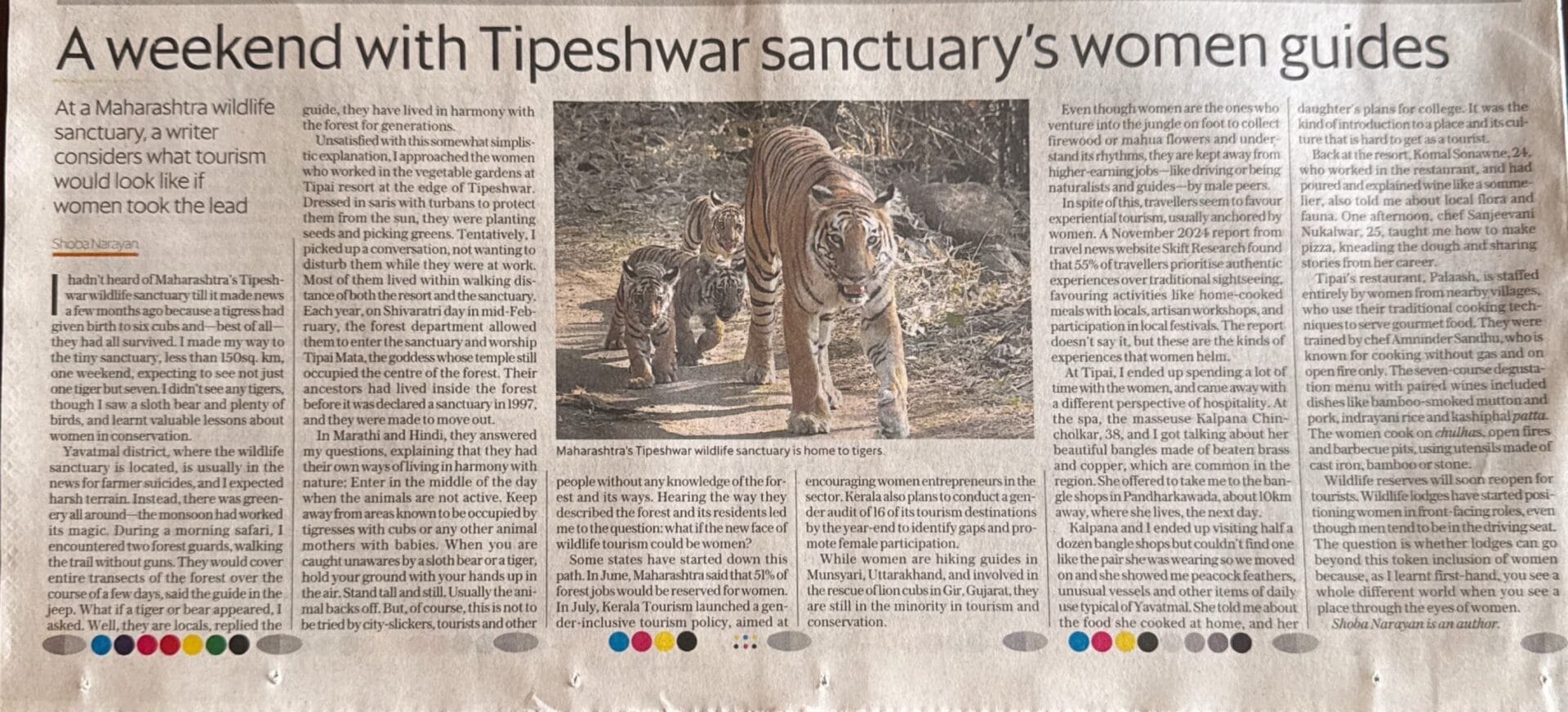
I hadn’t heard of Tipeshar wildlife sanctuary till it mushroomed, quite spectacularly amongst the wildlife crowd. This tiny sanctuary, less than 150 square kilometres in size, was in the news in June because a tigress there had given birth to six cubs and best of all, they had all survived. So there I was, on a weekend, expecting to see not just one tiger but seven. Spoiler alert: I didn’t see a tiger but I saw many other wondrous creatures including a sloth bear.
I had heard of Tipai resort at the edge of Tipeshwar, mostly because its dining experiences were designed by Chef Amninder Sandhu. Its in-house fine-dining restaurant, Palaash, was staffed entirely by women – many of them tribal – from the area. Ever since I saw a photo of Chef Sandhu and her team of women, dressed in orange uniforms that referenced the beauteous Butea monosperma or Palaash flowers, I had wanted to visit.
Yavatmal district where this wildlife sanctuary is located is known for many things but unfortunately also for its farmer suicides. So I went expecting a harsh unrelenting terrain. What I got was greenery all around. The monsoon had worked its magic and the forest was in bloom. You could almost hear it breathe and chuckle contentedly. The first people I encountered on the morning safari were two forest guards. They were walking on foot on the trail, which, in itself was unusual. Plus they carried no guns or any other form of self-protection. They would cover entire transverses over a few days, said the guide who was on the jeep with me. What if a tiger or bear appeared, I asked. Well, they were locals, replied the guide. They had lived with the forest for generations.
Unsatisfied with this explanation, I approached the women who worked in the vegetable gardens at Tipai. They were planting seeds, picking greens, dressed in sarees, and wearing turbans to protect themselves from the hot sun. Tentatively, I picked up a conversation with them, asked where they lived (most of them lived walking distance from the forest and the resort). Did local tribes visit the forest, I asked. They told me about how each year, on Shivaratri day, the locals were allowed to enter the forest and worship Tipai Mata, the goddess whose temple still occupied the centre of the forest. What about wildlife encounters, I asked. My Hindi is not excellent, but what I understood was that local tribes knew how to co-habit with wildlife. They entered the forest in the middle of the day, when animals were not active, when the tigers napped. They knew how to stay far away from known habitation of tigresses with cubs; to stand their ground and raise their hands menacingly when caught unaware by a sloth bear or tiger. “In fact, our ancestors believed that man-eating tigers were actually the result of black magic done by bad humans who entered the soul of the animal,” said one woman. Later, I read about this as being described as kradi mliva in an academic paper. And thus, I got my first naturalist lesson in Tipai, about the ways of the forest and its people – from local tribal women, no less. It was something I could not find in guide books or google, until I knew where to look. Hence the question: what if the new face of wildlife tourism was women? Could this be a way for luxury wildlife lodges to stay relevant in today’s age when sustainability and inclusiveness are the central themes among travel trends?
STORY CONTINUES BELOW PHOTOS….
Some states are already taking measures. In June, the Maharashtra government announced that 51 percent of forest jobs would be allocated for women. In July, Kerala Tourism launched a gender-inclusive tourism policy, aimed at encouraging women entrepreneurs in the sectors. The state also plans to conduct a gender-audit of 16 tourism destinations by the year-end. Even the private sector is attempting gender inclusiveness via efforts such as “Shefs at the Leela,” and “Women raise the Bar.” That said, the number of women working in wildlife tourism is woefully small and late in coming. Corbett Tiger Reserve began to hire women only in 2020. And while women have been celebrated for being hiking guides in Munsiari and rescuing lion cubs in Gir, the reality on the ground is more complex. Women jeep safari drivers in Tadoba for instance, are unable to find work in spite of government facilitation, largely due to societal pressures and constraints. In spite of all this, as India’s wildlife reserves celebrate World Wildlife Week (October 2-8), there seems to be a recognition that travellers today seek not just authentic but also ethical experiences that support conservation, local communities and gender parity.
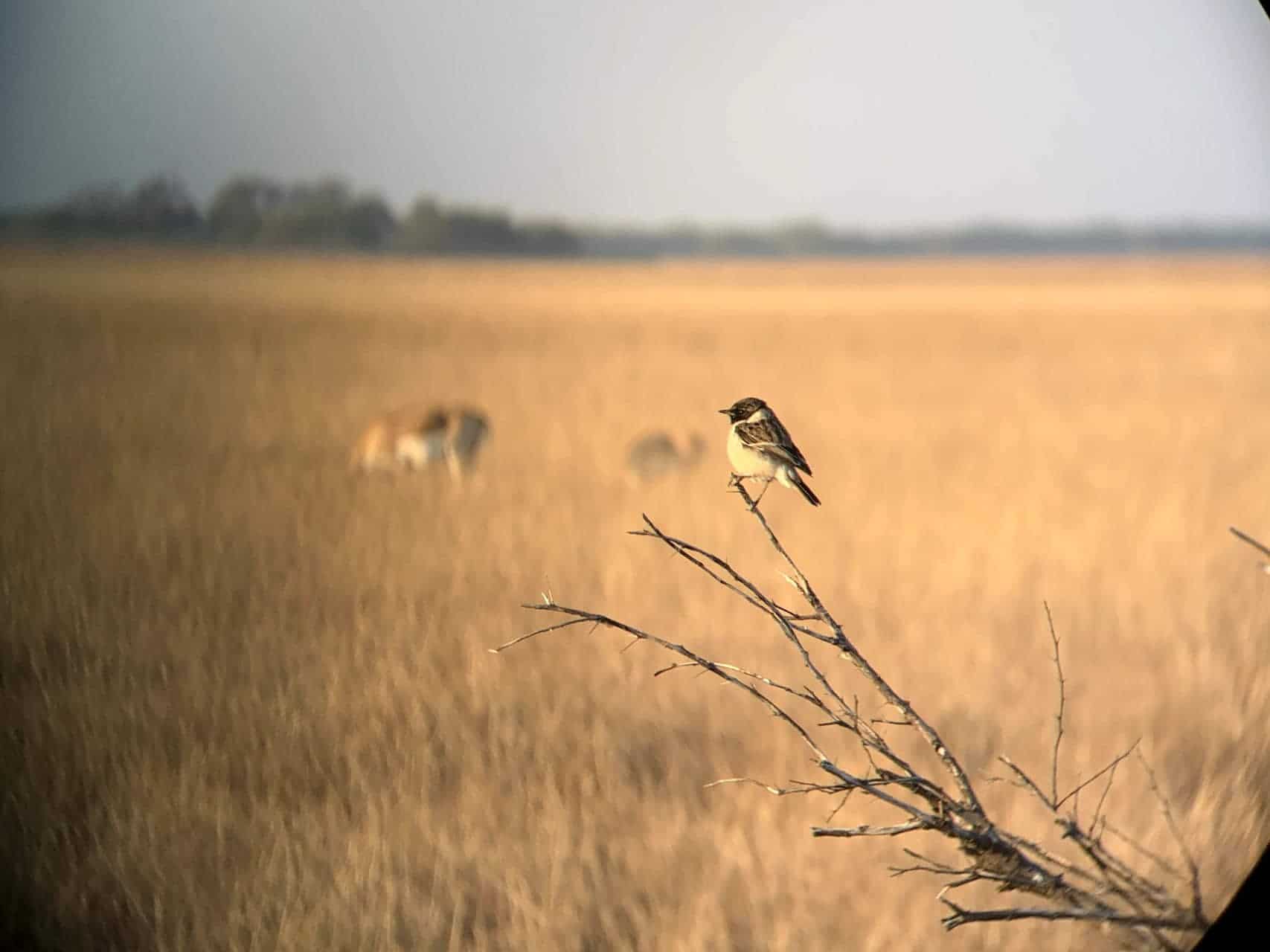
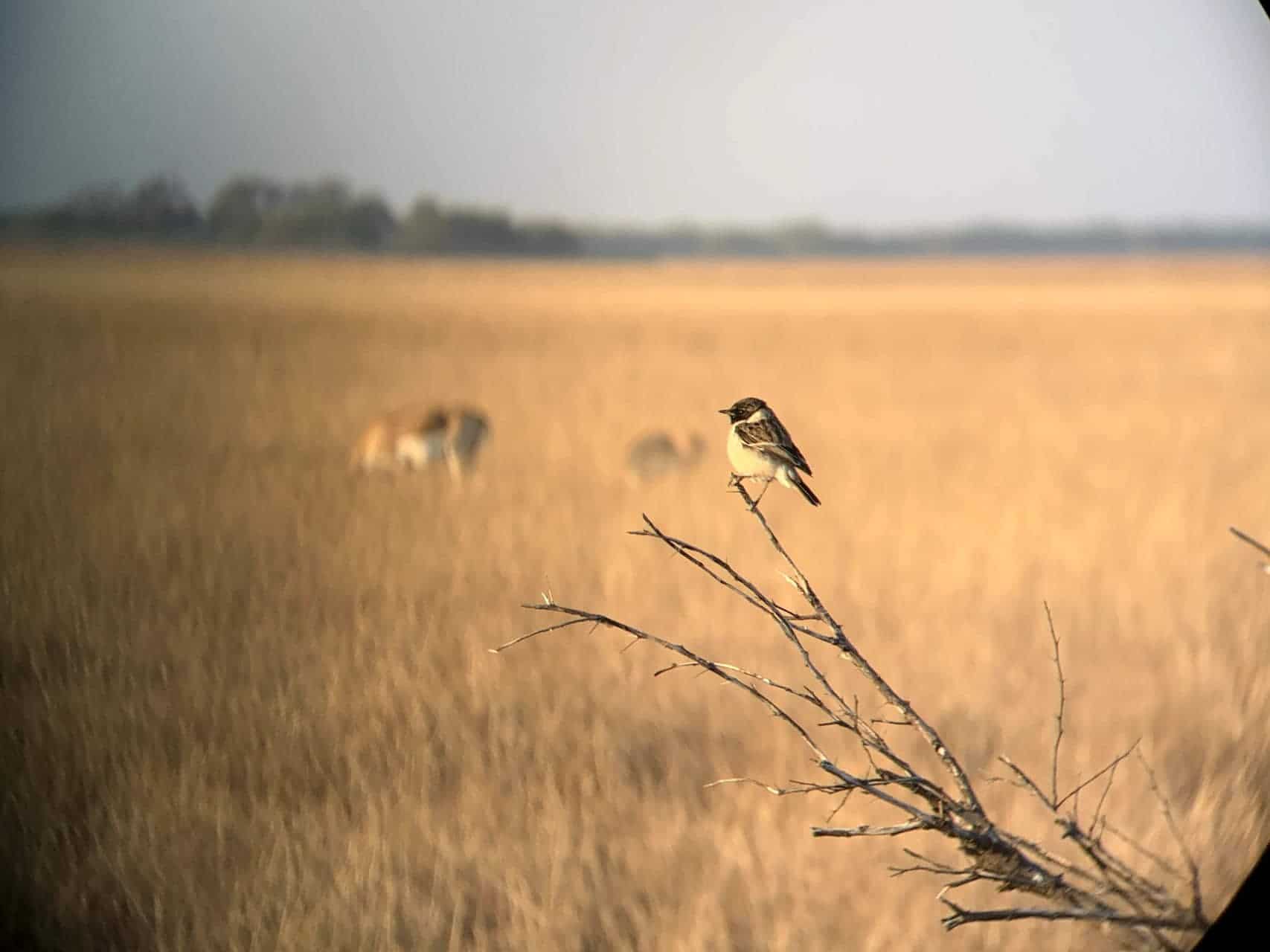
Tipai plays to these trends. Its large forest villas are made from locally sourced materials: rammed earth, terracotta tiles, teak furniture from the abundant trees all around, and a natural pool sans chemicals or chlorine. Its gardens hum with life ranging from scurrying scarab beetles to buzzing honeybees to golden jewel bugs. Its landscape is not manicured to human perfection but rather left wild to make non-human visitors feel at home. As a result, a Nilgai settled itself in the tiny shrub jungle next to my cottage one day, feeling hidden yet in plain sight. As I sat in the verandah outside my forest villa, the pied cuckoo, harbinger of the monsoon, and the subject of many Sanskrit poems flew in and out of the trees surrounding my villa. I didn’t even need my binoculars to see the abundant bird-life all around. They just came because they felt at home.
And then, there were the women– not many of them, but positioned in front-facing roles. There was Chef Sanjeevani who taught me how to make pizza with clarity and confidence. As we patted the dough, she took lead with a few male helpers. The result was a pretty good pizza, even if I say so myself, thanks in large part to the red sauce that she had pre-prepared. At the machan set in the middle of the grassland, young Komal gave me tea and told me about local flora and fauna. At the spa, I met Kalpana, who did my massage, which was good, but her bangles were amazing. Made of beaten bronze, they were like nothing I had seen. I asked if she could get something similar for me. They were expensive, she said, costing over Rs. 200. Sure, I replied. The next day, she offered to take me to the bangle shops in Pandharkawada where she lived and where she had bought her bangles. Kalpana and I ended up visiting half a dozen bangle shops. The prices had shot up a bit. Each pair was over Rs. 300. But none had the design that Kalpana was wearing. “I bought these over ten years ago,” she said in explanation. Then she showed me peacock feathers, unusual vessels, and other sights typical of that district in Maharashtra. She told me about the food she cooked at home, and how her daughter was going to college. It was the kind of tourist introduction I would never had got had it not been for a “woman-encounter” over bangles. “The detail and diversity that women bring to wildlife tourism is what makes a lodge, experience or narrative stand out,” says Shoba Rudra, Founder, Rare India with 17 owner-driven boutique wildlife-lodges in her portfolio.
On my last night, I had lunch at Palaash, the fine-dining restaurant at Tipai. The seven-course degustation menu with paired wine was reminiscent of the food I have eaten at Farmlore or Masque. The chefs though, were two women who cooked the food over a chula or open-fire using traditional cooking methods. Komal was there that night, pouring me wine after explaining the names and fragrances of each pour. Had she not told me earlier that she grew up in Kolhapur speaking just Marathi, I would have assumed that she had trained in France. I am exaggerating, of course, but only just a bit.
END



Leave A Comment