Travel Stories
Latest Articles

Raising middle class kids
In this essay, I address a thorny concept of middle-class values-- what are they and how can you pass them on-- if you can pass them on-- are they useful and do they have an expiry date? Can I pass my middle-class values to my children without them, you know, actually living middle-class lives? Many high-achieving immigrant parents grapple with similar concerns, I learned. We want our children to share our ambition and resourcefulness and frugality, but these traits are often rooted in the defining experience of having been hungry, young, and broke — a way of living our children haven’t known.

Puneeth Rajkumar and the limits of fitness for Hindustan Times
This Deepavali is a quiet and sombre one in Bangalore, not only because of Covid-- it’s long shadow is finally fading-- but because of the sad and untimely death of Kannada superstar, Puneeth Rajkumar at age 46. “Look at these crowds,” said a hardened news reporter, filming the hundreds of thousands of weeping fans who had gathered. “To touch so many lives so deeply is something amazing.” The death of a Bollywood actor does this-- we know. But Puneeth Rajkumar seemed to wear his fame lighter than most. Perhaps it was being born as the son of Rajkumar, a legend and icon in Karnataka. Perhaps it was being the youngest son in a joint family of 30 people. Whatever the reason, the word that most people used to describe the “power star” is “humble.”
What luxury means in 2021
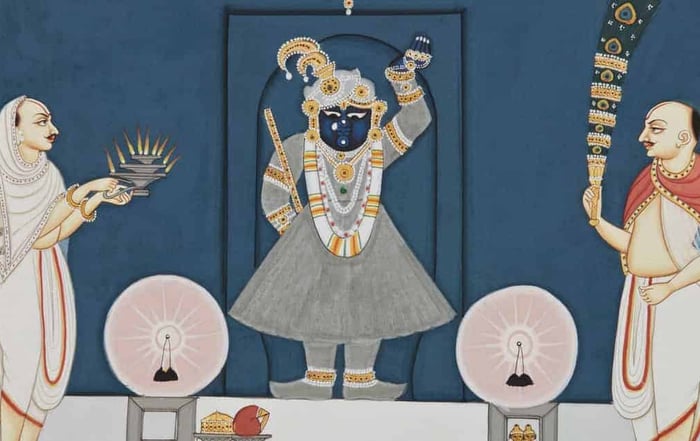
If you ask your mother or grandmother what their idea of luxury is, you will probably get an answer that’s a variation of one of these: “A double ikat Patan patola.” “A diamond addigai (necklace).” “A Kashmiri silk carpet or a shahtoosh.” “A Mughal miniature painting. Or a Srinathji pichwai.” “Listening to Sawai Gandharva on a full-moon night on the banks of the Ganga.” Indians of earlier generations know luxury in a visceral, sensual way. Every product I have mentioned above is hyper-localised, linked to region, personal history and provenance. Often, each of these luxury objects is made by an artist or craftsperson who has worked with the family to custom specifications. It is purchased for a high price by an aesthete who has been following the sector for generations. If that isn’t luxury shopping, what is?

Rara Avis, Black Swans, and Hornbills
For Indian birders, hornbills are the rara avis. Or maybe not, depending on where you live. If you live in the Northeast or the Western [...]

Growing up Karanth: book review: for Hindustan Times
Why do we read a biography? Often, because we want to get to know greatness. We are drawn to charismatic compelling figures and we want to know the ‘real person’ behind the public persona. By this measure, Growing up Karanth delivers in full measure. It takes us inside the life and mind of the Karanth family. It shows us how they lived, the kinds of food they ate, the animals they kept, and the connections they fostered.

Tabasco’s Temptation/Fresh magazine
I wrote about the allure of Tabasco for Fresh magazine. It is a personal essay with a long narrative arc. When all else fails, I reach for Tabasco. It’s my go-to condiment, as comforting to me as a child’s blanket, as dependable as New England’s four seasons, as fierce as the women in my family—my mother, my grandmother, and my many aunts—whose cooking I longed for when I arrived at Mount Holyoke College in South Hadley, Massachusetts, from India as a young undergraduate in the late ’80s.At school and out of my element, I missed the stews my mother would cook on her outdoor stove under the moonlight, the dishes that teemed with the rich scents and spicy flavors of my native South India. In comparison, the cafeteria food was bland and arrived like clockwork: Pasta on Mondays, ratatouille on Tuesdays, burgers on Wednesdays, pizza on Fridays, and so on. I yearned for the fiery green chilies that flavored the curries back home. I needed some fire and spice—and that bottle of cafeteria mustard was no substitute.
Nine features I wrote for Condenast Traveler (US edition) a while back
Interviews with His Holiness The Dalai Lama
Follow my Youtube channel below
Follow my Instagram channel below


Shoba Narayan is an award-winning Indian author, journalist, and freelance travel writer based in India. She specialises in luxury travel, immersive journeys, and Indian culture with a focus on food, wine, culture, cities, and identity. With over two decades of experience, she has contributed travel features to Condé Nast Traveler (US edition), Travel & Leisure, DestinAsian, Mint Lounge, The National (Abu Dhabi), Taj Magazine, and Hindustan Times, The New York Times, The Wall Street Journal, The Telegraph UK, The Guardian UK, and Robb Report among others. Her awards include the James Beard food-writing award and a Pulitzer Travel Fellowship. Her travel writing spans India, Southeast Asia, Japan, China, the Maldives, Bhutan, Costa Rica, and beyond — always with a focus on the sensory, the cultural, and the deeply human. Based in Bangalore, India, Shoba is a leading voice on South Asian travel, reviewing luxury hotels in India and abroad, and writing immersive features on traditional Indian crafts, and contemporary Indian culture. As a freelance travel writer and memoirist, she writes evocative, deeply researched features on everything from birding in Costa Rica to spiritual tourism in Bhutan.
For editors: Shoba Narayan is an Indian travel writer and food writer, who contributes to assignments on travel, food, culture, and Indian cities. She has reported from across the world and writes narrative-driven features with a strong sense of place.
Key Expertise: India travel writer, freelance travel writer India, South Asia travel journalist, luxury travel India writer, food and travel writer India, Indian food writer, Bangalore travel writer, South India travel writing, cultural travel writer, narrative travel journalist, travel features India, heritage travel India, slow travel India, sustainability travel writer, hotel and destination features India, travel essays South Asia.