
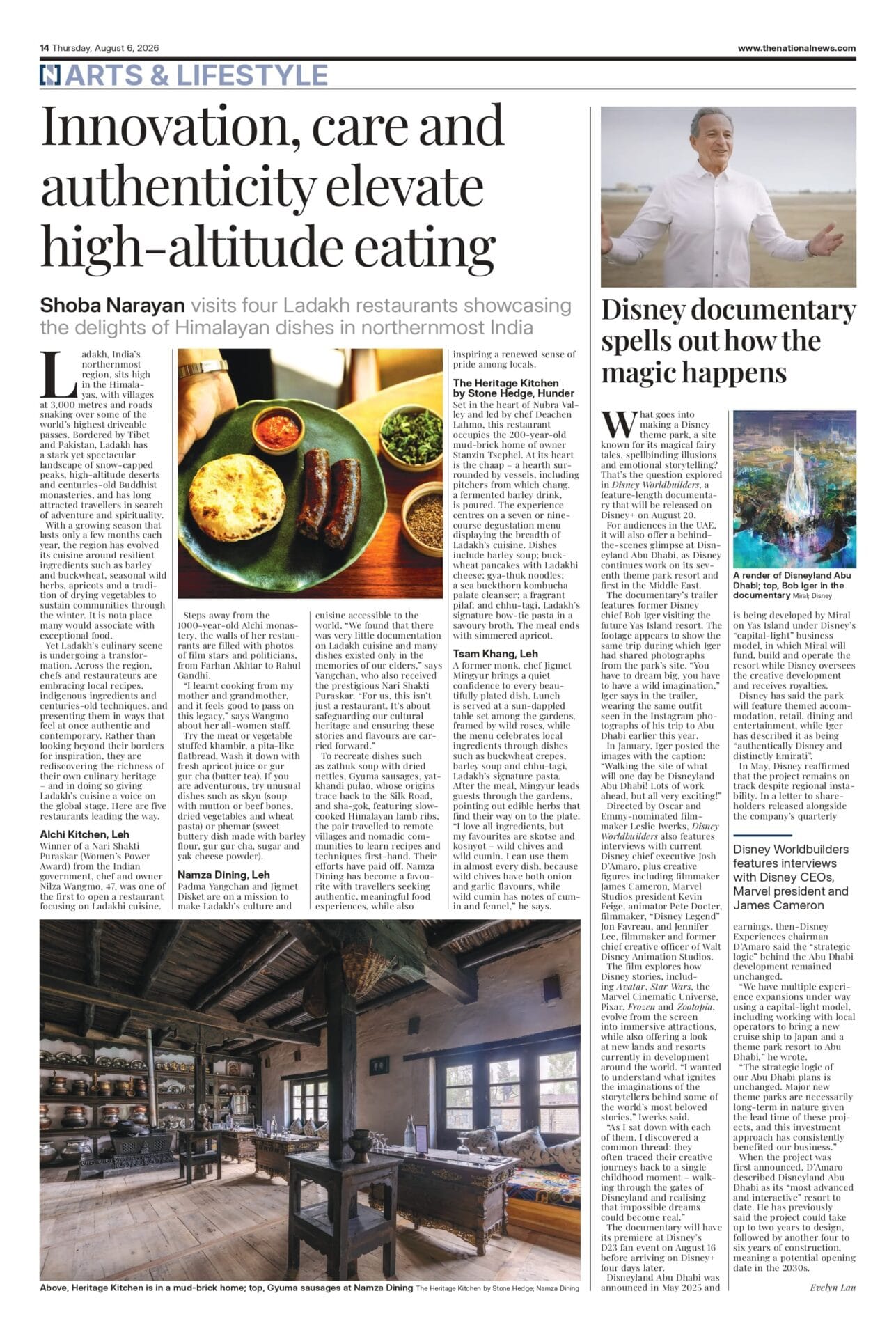
Ladakh, India’s northernmost region, sits high in the Himalayas, where villages perch above 3,000 metres, and roads wind over some of the world’s highest motorable passes. Bordered by Tibet and Pakistan, its stark yet stunning landscape of snow-capped peaks, high-altitude deserts and centuries-old Buddhist monasteries, has long drawn travellers in search of adventure and spirituality. The growing season lasts only a few months each year, limiting what can be cultivated. As a result, Ladakhi cuisine has evolved around resilient grains such as barley and buckwheat, seasonal wild herbs, apricots and a tradition of drying vegetables for the long winter. It is not, at first glance, a place where you expect to eat exceptionally well. That was the biggest surprise of my recent nine-day trip. Every meal I ate was delicious and beautifully presented, built around local ingredients that reflected the rhythms of this high-altitude landscape. But what struck me most was the confidence of the chefs and restaurateurs. Rather than reproducing familiar tourist fare, they were celebrating Ladakhi recipes, ingredients and traditions with pride. It felt like a cuisine coming into its own, finding its voice not by looking outward, but by looking inward. Here are some of the standouts.
Alchi Kitchen, Leh: Winner of a Nari Shakti (Women’s Power) award from the Indian government, Chef-Owner Nilza Wangmo, 47, was one of the first to open a restaurant focusing on Ladakhi cuisine. Steps from the 1000-year-old Alchi monastery, the walls of her restaurants are filled with photos of filmstars and politicians ranging from Farhan Akhtar to Rahul Gandhi. “I learned cooking from my mother and grandmother and it feels good to pass on this legacy,” says Chef Nilza about her all-women staff. Try the meat or vegetable stuffed khambir, a pita-like flatbread. Wash it down with fresh apricot juice or gur gur cha or butter tea. If you are adventurous, try unusual dishes like Skyu (a soup made with mutton or beef bones, dried vegetables and a wheat pasta) or Phemar, a sweet buttery round dish made with barley flour, gur gur cha, butter, sugar and yak cheese powder. @alchikitchen
Namza Dining, Leh: Padma Yangchan and Jigmet Diskit care about making Ladakhi culture and cuisine accessible to the world. “We found that there was very little documentation on Ladakhi cuisine and many dishes existed only in the memories of our elders,” says Padma, who has a Nari Shakti Puraskar award from the Indian government. “For us, this isn’t just a restaurant. It’s about safeguarding our cultural heritage and ensuring that these stories and flavours are carried forward.” Recreating dishes like Zathuk, a delicious soup made with dried nettles; Yatkhandi Pulao whose origins go back to the Silk Route; and Sha-gok, a dish with crispy slow-cooked spiced Himalayan lamb ribs, was hard. The partners and their chefs tracked down rural and distant communities and nomadic cultures to learn their recipes and techniques. Their timing is good. Tourists want authentic and meaningful food experiences. Locals feel a growing sense of pride in Ladakh’s culinary heritage. @namzadining
The Heritage Kitchen by Stone Hedge, Hunder: In the middle of Nubra Valley headed by Chef Deachen Lahmo, this restaurant makes you feel like you are in a home. And in fact, this is the 200-year-old mud-brick home of owner, Stanzin Tsephel. The centerpiece is the chaap – the hearth filled with vessels including pitchers from which chang is poured. The food is a seven, or nine-course degustation menu. We began with namthuk, a traditional barley soup; then moved to tien tien – savory buckwheat pancakes with a side of tangthur or Ladakhi cheese; gya-thuk, a noodle dish that is served in both vegetarian and non-vegetarian versions; a palate cleanser made with sea buckthorn kombucha; then pola or rice pulao/pilaf and chhu-tagi, Ladakhi’s signature noodle dish, which looks like bow tie pasta and is served with a simmering savory broth. Dessert was simmered apricot. What surprised me was how light I felt after eating nine courses. @thestonehedgeladakh
Tsam Khang, Leh: It is not often that a meal leaves you with a feeling of peace, but this was the case for me after eating Chef Jigmet Mingyur’s food. An erstwhile monk, each of Jigmet’s beautifully plated dishes exuded taste and confidence. The sun-dappled table was set in the midst of a garden with wild roses on the side. The menu included buckwheat crepes, barley soup, chhutagi-pasta, and more. After the meal, Chef Jigmet walked us through his gardens, picking out wild chives, and other edible herbs, all of which make their way into his food. “I love all ingredients, but my favourites are skotse and kosnyot – wild chives or garlic and wild cumin. I can use them almost every dish, because wild chive has a both onion and garlic flavours and wild cumin has both cumin and fennel flavours,” he says. @tsam_khang @ladakhichef
Ryu Oka, Leh: Lots of Ladakhi chefs admire this newly opened restaurant in the Grand Dragon, Leh. It is hard to transport fresh seafood into Ladakh because refrigerated road transport is virtually non-existent. Supply chain management is a particular problem in Ladakh where snowfall can cause all flights to be cancelled. And yet, there is shrimp, prawn, salmon and fresh seafood on the menu. Each dish draws from the travels of Anjum Qadir, the scion of the Abdu family that runs the Grand Dragon. The Pan-Asian menu is not Ladakhi but exudes the confidence of a seasoned restauranteur rooted in Ladakh. The paintings on the wall are by Anjum’s father. The design draws on the mountains all dishes. The jewel-like presentation of the dishes is reminiscent of an omakase restaurant. “The approach here is not fusion,” says Anjum. “Ingreidents are highlighted on their own right, rather than blended into existing (Ladakhi) cuisine.” @ryuoka.ladakh

Leave A Comment